We have used city cards during our past European trips and found them to cut down the cost of attractions and allow us to bypass crowded entry lines. The key is to use the card enough to accomplish those goals. In Italy, Florence would be the only city worth the cost of $90 per person. Upon leaving Florence, we had used the card at nine different locations and obtained priority entry at most of them. This reduced the price to about 10 dollars per attraction, per person. Considering that the entrance fee for these attractions was between 12 & 30 dollars per person, we saved some money that could be used to enjoy more gelato. Plus, with priority entry, it cut down the amount of time we had to wait in line.
I have written about immersing ourselves into the Florence cultural scene. I must disclose that neither of us place the arts as a priority when visiting locations. We certainly appreciate the arts, but we would never describe ourselves as art aficionados. In most museums, we have a two to four hour limit, before everything starts to blend together. We did our homework before travelling to Florence, and decided what highlights we wanted to see in each museum. We also tried to limit the museums to two for each full day. Any more than that, we could feel the “museum burnout”. I thought this plan worked well for us. Even with this plan, we were ready to be done with museums at the end of our Florence stay.
It is Thursday, May 22nd, and the weather is getting warmer every day. Our Italian plan was to work our way from south to north, knowing the weather would keep getting warmer. We got lucky as the really stifling heat arrived shortly after we returned home. The world famous Uffizi Art Gallery was our baptism of the Florence museums. Entry into this museum required multiple steps, including one I didn’t know about. With the Firenze Card, I was able to call in for a special ‘timed entry code’. Since crowds only increase during the day, we chose the entry time of 8AM which is when the museum opened. We arrived early with our Firenze cards and that special code. We were amongst the first 10 persons in line. The museum opened and as we hit the ticket checker, we were told that we needed to take our code over to another booth to receive our paper tickets. We rushed over to the ticket booth and encountered our only rude tourist-industry service worker during our entire trip. This guy was overtly rude from the beginning and had no business interacting with tourists. But major kudos to Italians as this was the only rude person we encountered during our vacation. We received our tickets and were still in the first 100 persons to enter the museum.
The first major highlight was the ‘Annunciation by Leonardo da Vinci. This masterpiece was his first commissioned work. This piece features the Angel Gabriel telling the Virgin Mary that she will conceive Jesus, the child of God. Fun fact: Gabriel looks like he’s taking a photograph of Madonna.

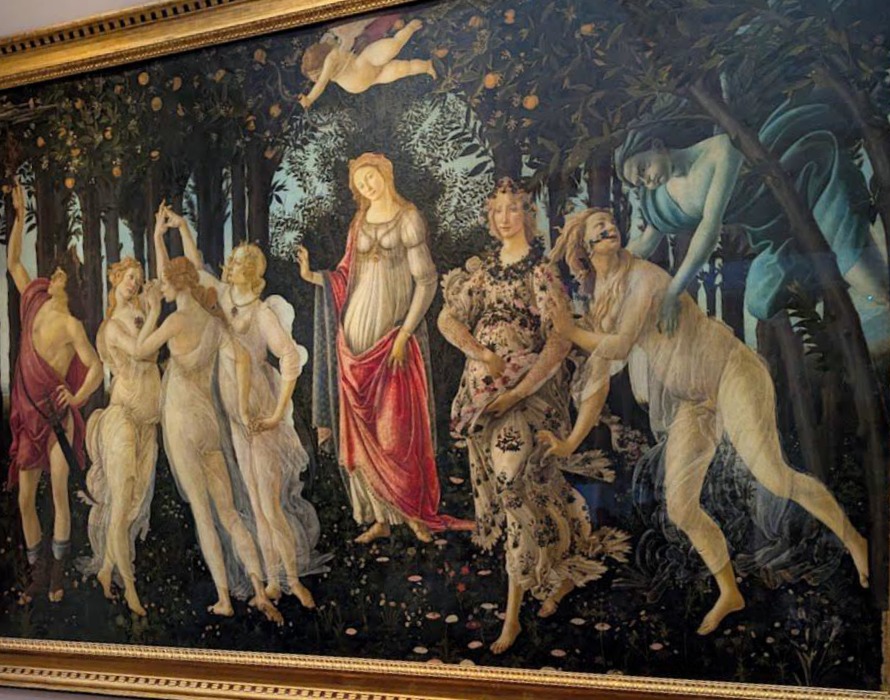
La Primavera by Botticelli is considered one of the greatest works of art. Primarily because it was highly controversial and experts have countless interpretations of what Botticelli intended to portray. This pagan scene with several classical mythology figures was allegedly commissioned by the Medici rulers and completed around 1480. With the progressive tone of this painting, Florence made a statement about freedom of expression, one of the most important tenets of the Renaissance era.
Fun Fact: I. One aspect of the painting is a depiction of the progress of the spring season. (reading from right to left) The wind of early spring blows on the land and brings forth growth and flowers, presided over by Venus, goddess of April. At the left is Mercury, the god of the month of May in an early Roman calendar. He is chasing away the last clouds before summer.
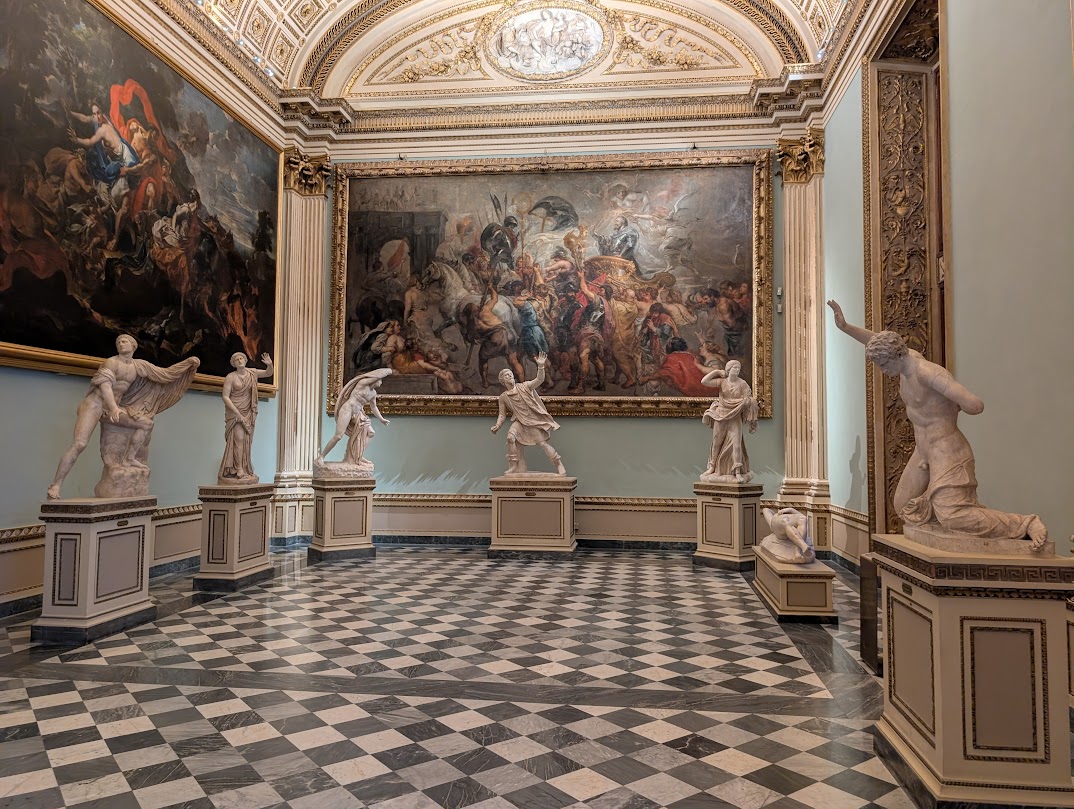
The Uffizi gallery is huge with multiple wings featuring famous artists such as Giotto, Rembrandt, Michelangelo, Raphael, and others. After the House of Medici died out, most of their art collections were donated to Florence. The Uffizi building was completed in 1581, and has hosted art collections since the 16th century. Art lovers could spend days in this heavenly artistic destination, but we were finished after about three and 1/2 hours. In the first hour, Uffizi was relatively easy to maneuver around, but the crowds increased every hour. After being spooked by the strange, but famous Medusa by Caravaggio, we departed the museum. To illustrate our level of art expertise, Amy dedicated this room as the “action-statues room”.
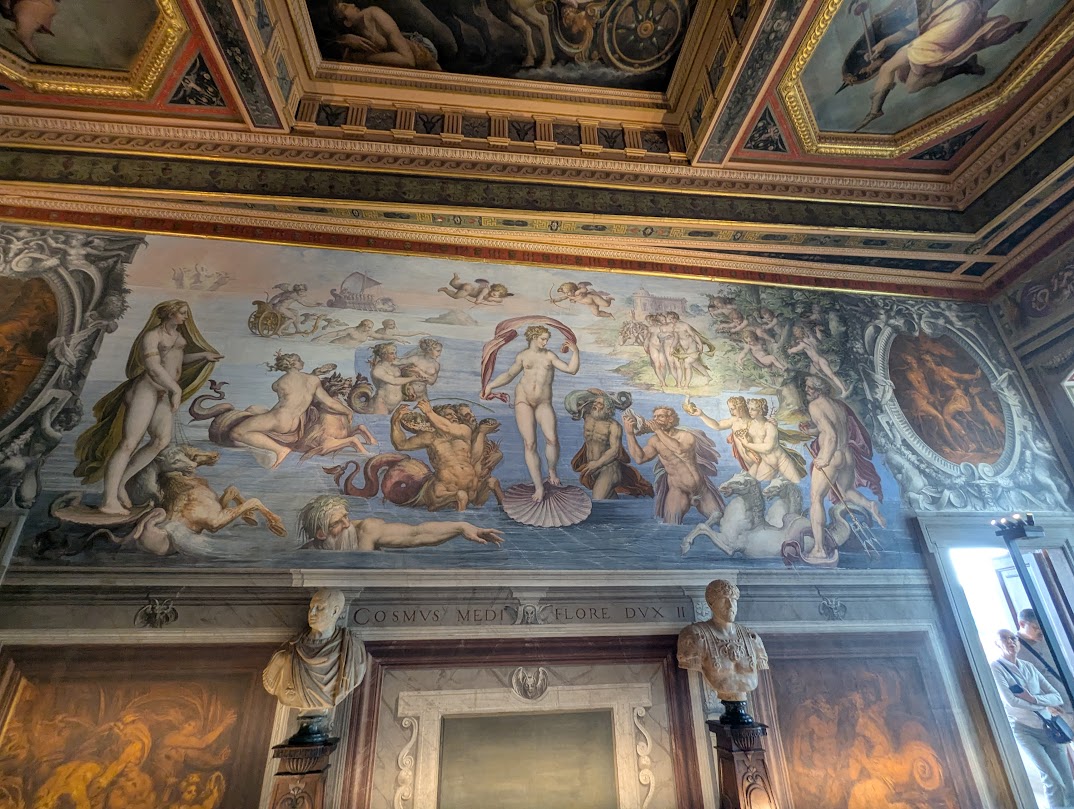
Firenze Card stop #2 was the nearby Palazzo Vecchio. It originated in 1299 as a fortified palace. It was crowned with projecting battlements, supported by small arches which were used to drop heated liquids or rocks onto invaders. The original statue of David stood at its entrance from 1504 until 1873 when it was moved to the Accademia Gallery. A copy of David now guards the entrance. The entrance opens up into Piazza Signora. Eventually, the palace was used by the 16th century Medici court who decorated the halls and rooms to what is seen today.
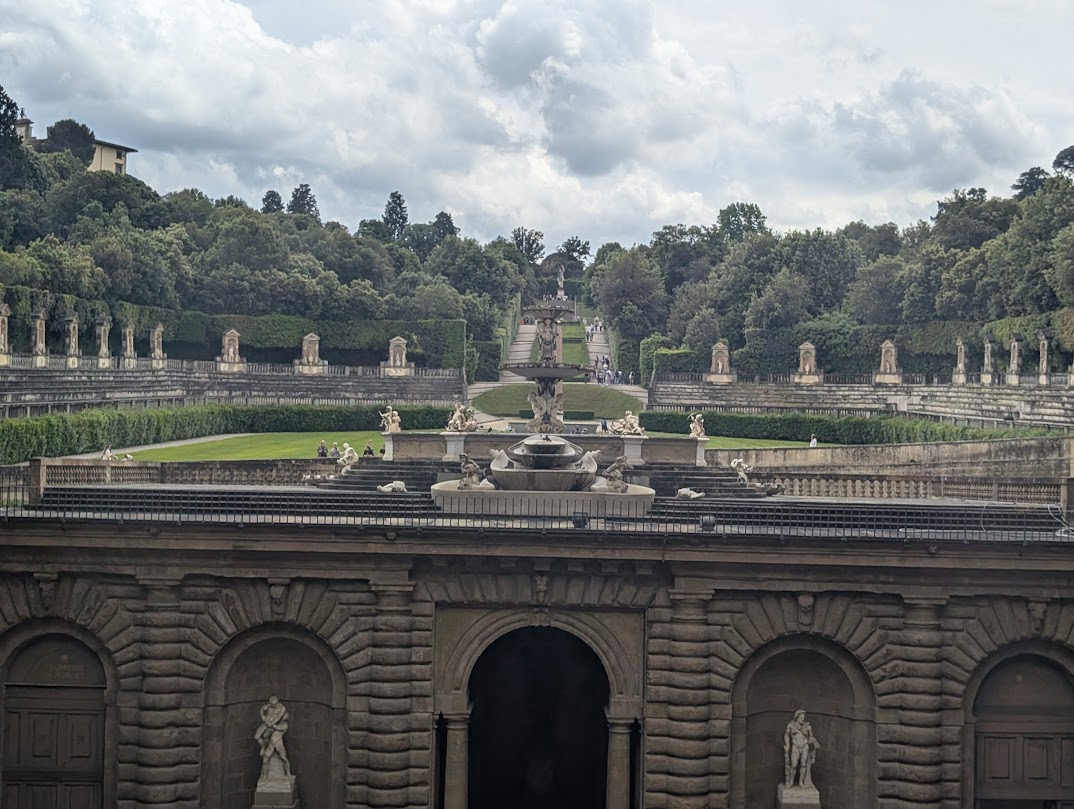
After returning to our VRBO and having lunch nearby, we walked to the magnificent Pitti Palace which is combined with Boboboli Gardens. This was another museum complex covered by the Firenze Card. The city of flowers would certainly be in full-bloom during May, so we were looking forward to the gardens. The Pitta Palazzo was purchased in 1550 by the Medici as their official residence. Over time, it also became the official premises for the Hapsburgs and the Savoy’s. In 1919, King Emmanuel II gave the palace to Florence, and it is now the largest museum complex in Florence. The complex contains the Palatine Gallery & Royal Apartments, the Gallery of Modern Art, the Medici Treasury, Museum of Costume and Fashion, and the Porcelain Museum. After Florence purchased the palace, additional land was purchased behind it to create Boboboli Gardens. Since we had been in museums all morning, I must confessed that we skipped several of these complexes. At some point, we both looked at each other and knew we were done with indoor museums for the day. Of course, I would have skipped the Modern Art building no matter what. Not a fan of modern art. I would rather see Norman Rockwell over Andy Warhol any day of the week!
The Boboboli gardens were a precursor to what we found around the entire city of flowers. A complete disappointment. Most of our european travels have included the month of May. It’s a beautiful time of the year to enjoy the beauty and fragrance of flowers. The lack of flowers in Florence was puzzling. Locating flowers in this city was a mission in futility. Every other location in Italy easily beat Florence in regard to flowers.
In the evening, we had a classic Florentine dinner at Lungarno 23. I’m usually conservative about what I order in restaurants, but I had to try the Florentine steak filet which is served raw. The flavors were expertly seasoned, but since I don’t indulge in Sushi, my mind was fighting the urge to truly enjoy this delicacy. Thumbs up for the seasoning. Right next to our VRBO is a restaurant/wine shop and Amy was able to purchase a Black Rooster chianti for a ridiculously low price.
On the following day, Thursday, May 23rd, we marked our third week in Italy by starting slightly later in the morning. We walked across the Ponte Vecchio for what seemed like the 100th time. We then proceeded to Piazza Santa Maria Novella. Our plan changed when we found Santa Maria Novella Basilica not opening for another hour. Since we had a timed entry to the Accademia Gallery right after lunch, we improvised our plans. Besides, as we walked by the church, the large entry doors were opened and we were able to get a decent view of the interior. Since we would be having lunch at the Lorenzo market, we set off for the Basilica of San Lorenzo. This church was already on the docket for the following day.
San Lorenzo is a remarkable church, with a simple exterior, but an extraordinary interior. The church was originally consecrated in 393, reconstructed in 1059 on the order of Pope Nicholas II, and finally renovated in 1418 on orders of the Medici family. This was the parish church for their family, and all of their rulers are buried here. Sparing no expense, the Medici family hired the leading Renaissance architect of the fifteenth century, Filippo Brunelleschi, to design the building. Michelangelo was commissioned to build the Sacristy and the church library as well as the apse extensions starting in 1519. Finally, they hired Donatello for the interior decorations and sculptures. With these superstars, this church was destined to be one of the most respected churches in the world. Amy & I wandered accidentally into the opulent Cappella del Principi and were instantly amazed. The vast room literally overpowers everyone upon entry. The colored marbles along with the endless precious stones adorning the walls are amazing. If there was any doubt about where the Renaissance era started, please journey to this church.
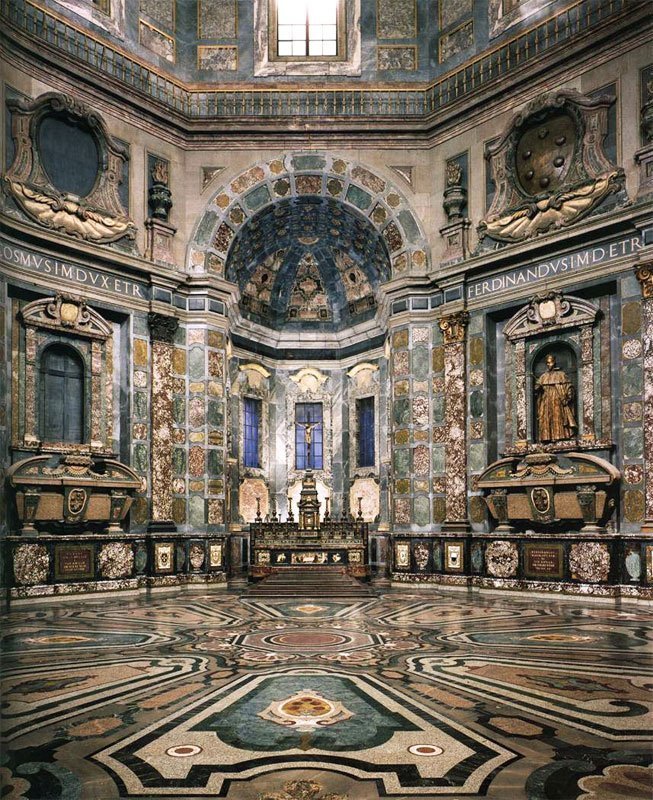 The opulent Cappella del Principi in Basilica di San Lorenzo
San Lorenzo Fun Fact: In 1527, Florence citizens rebelled against the Medici. Michelangelo supported the rebels, but the Medicis recaptured the city in 1530. Pope Clement VII, a Medici sentenced Michelangelo to death. Michelangelo hid in a small chamber under the Medici chapels. He made many charcoal & chalk drawings in this hidden space which wasn’t discovered until 1975. Michelangelo was later pardoned by the Medici rulers so that he could complete work on the Sistine Chapel and the Medici family tombs.
One of my favorite European activities is to hit the huge food marketplaces in the larger cities. I wish they had these types of markets in the U.S. From dozens of fresh food cafes, to displays of fresh fish, meats, cheeses, fruits, veggies, pastas, and many other items all contained in one building. We had a delicious lunch at the Lorenzo Food Market. Outside of the market there were a multitude of vendors selling all kinds of crap, I mean goods. We have noticed in Italy, that anyone wanting to buy a leather purse or handbag would have at least a thousand opportunities to do so.
 The Lorenzo Food Market
Drum Roll please: The number #1 tourist attraction in Florence is the magnificent David statue in the Accademia Gallery. In addition to the Uffizi Museum, the Accademia also required a timed entry. This time, we knew to get our paper ticket before we stood in line. The Accademia has other rooms displaying historical art and music objects, but most tourists rush to the end to gaze endlessly at David. We resisted that temptation and enjoyed art held in the other Halls.. In the Hall of Musical Instruments, there is a display of the first pianos ever built. There are Stradivarius violins and other historical musical instruments worth the visit. I never realized how many different shapes of early pianos were designed. In the beginning, they were trying to figure out which shape (tall vertical piano was attempted) would not only provide the best musical sounds, but also be practical.
The Hall of Prisoners was finished by Michelangelo was finished in 1545. This hall is lined with his unfinished statues. Pope Julius II had hired Michelangelo to supply the statues for his tomb, but the money ran out and they were never finished.
Fun Fact: In the Hall of Colossus is the masterpiece, ‘Rape of the Sabines’. This piece is still heavily debated to this date, but the most commonly accepted version is the story about how the Roman founders started Western European Civilization. Since Rome had been founded by men, they needed women to expand their city. Romulus attempted to form treaties with other nearby tribes which would have those tribes send some of their women to Rome. Not surprisingly, this didn’t pan out. Romulus then devised a plan where they would host a large festival and invite their neighbors. Apparently, the Sabines loved a good festival and their entire population attended. During the festival, after many adult beverages had been served, Romulus gave the signal, and the Romans abducted all of the Sabine virgins. Of course, the Sabine men were not happy, and a war broke out. Legend has it that at the beginning of a big battle, the Sabine women stood between their Roman husbands and their kinfolk, begging for the bloodshed to end. Leave it to the women once again, as they were successful with their pleas, thus jumpstarting the Roman Empire.
 Rape of the Sabine Women
Michelangelo’s David is inspiring. The painstaking detail of the muscle mass, the circulatory system, and the human-like features leaves everyone in awe. Michelangelo started David in 1501. When it was finished, David proudly guarded Piazza della Signora until it was placed into a large wooden crate. Wait, what!? Yes, because of the elements, it was decided to move David inside. However, there was no place worthy and large enough to move David to. So that is when the idea to build the Accademia Gallery started. It was designed for the sole purpose of moving the David statue inside to the proposed museum. In 1873, David was moved inside the Accademia, removed from the wooden crate and placed upright for all to admire. (and take pictures of)
So why is Michelangelo considered the greatest sculptor of all times? He worked differently than other sculptors. Instead of creating a plan of attack, he allowed the sculpture to reveal itself in the stone. By using his amazing intuition and mind’s eye, Michelangelo would chisel away what didn’t belong.
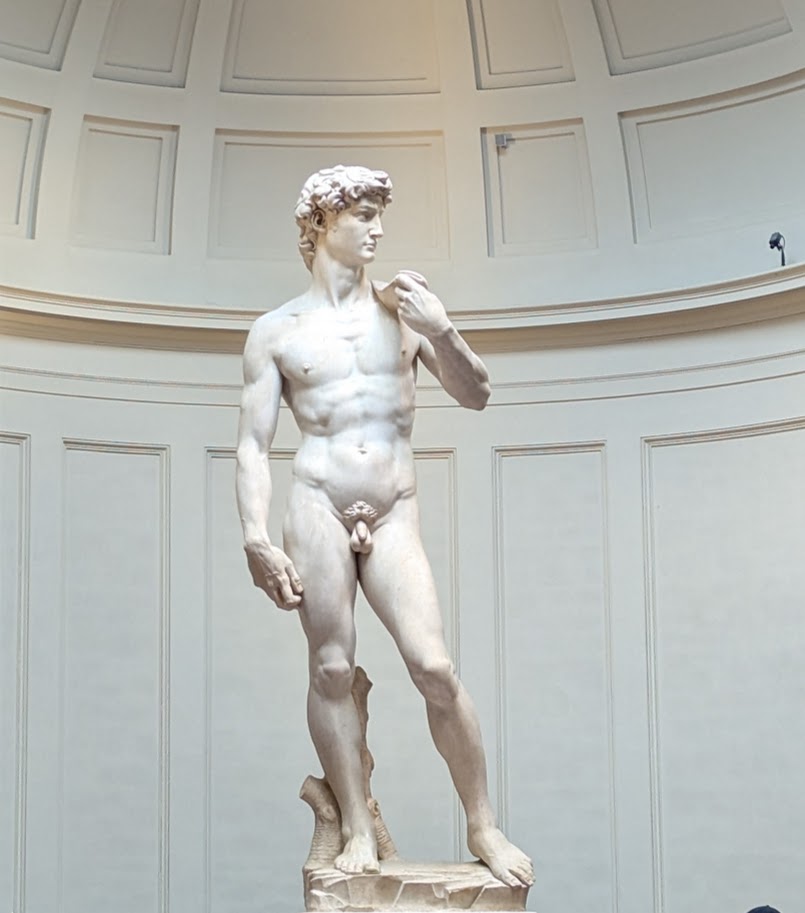
We finished off the day with truffle pasta at Forneria Firenze. I’m still waiting on someone to carve a statue of me!
 Our Italian Adventure
Leave a comment